Introduction
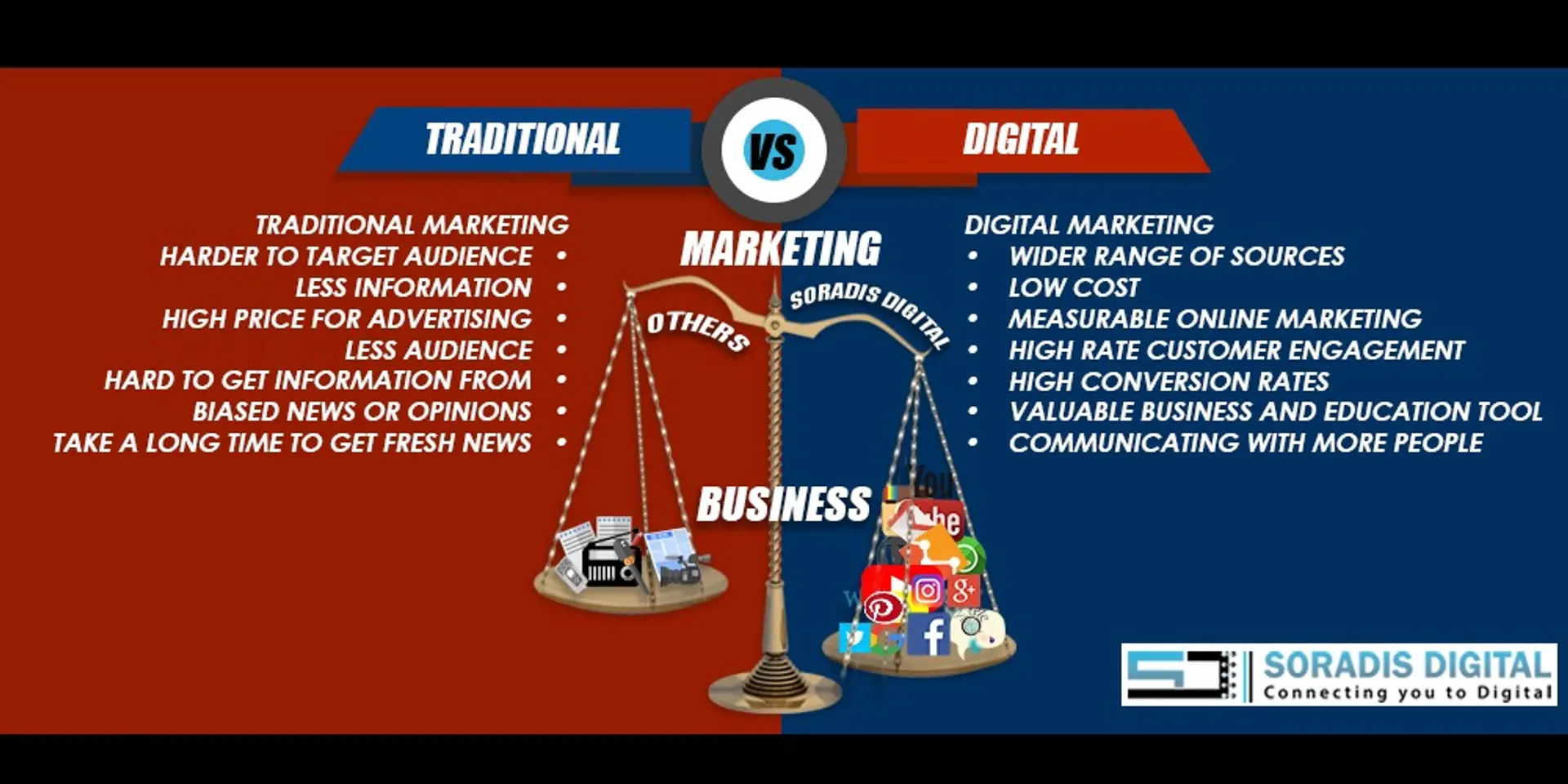
For decades, businesses promoted themselves through TV ads, newspapers, radio spots, and billboards. Today, the same businesses also run Google Ads, post on Instagram, send email campaigns, and optimize their websites for search. This shift has sparked an ongoing debate: traditional marketing vs. digital marketing—which is better?
The truth is, neither approach is universally superior. Each has distinct strengths, limitations, and ideal use cases. In 2026, the smartest brands don’t choose one over the other—they understand both and use them strategically, often in combination. This blog breaks down the key differences, pros and cons, and how to decide what’s right for your business.
What Is Traditional Marketing?
Traditional marketing refers to promotional activities that use offline, non-digital channels to reach audiences. These are the methods that dominated before the internet became mainstream.Common traditional marketing channels include:
- Television commercials (national, regional, local)
- Radio ads
- Print media (newspapers, magazines, brochures)
- Direct mail (postcards, catalogs, flyers)
- Outdoor advertising (billboards, bus stops, transit ads)
- In-person events (trade shows, exhibitions, local sponsorships)
Traditional marketing is typically broadcast-style: one message is sent to a large, often geographically defined audience, with limited ability to personalize or track individual responses.
What Is Digital Marketing?
Digital marketing encompasses all marketing efforts that use digital channels and technologies—primarily online—to connect with current and prospective customers.
Key digital marketing channels include:
- Search engines (SEO, Google Ads, Bing Ads)
- Social media platforms (Instagram, Facebook, LinkedIn, YouTube, TikTok)
- Email marketing
- Content marketing (blogs, videos, podcasts)
- Display and video ads (banner ads, YouTube ads, programmatic)
- Affiliate and influencer marketing
- Mobile marketing (SMS, in-app ads, push notifications)
Digital marketing is inherently data-driven and interactive, allowing businesses to target specific audiences, measure performance in real time, and adjust campaigns on the fly.
Key Differences Between Traditional and Digital Marketing
Understanding the core differences helps you choose the right mix for your goals.
1. Reach and Targeting
- Traditional marketing reaches broad audiences within a geographic area or publication readership. For example, a local newspaper ad reaches everyone who reads that paper, regardless of their specific interests.
- Digital marketing enables precise targeting based on demographics, interests, behaviors, search intent, and even past interactions. You can show ads only to people who searched for specific keywords or visited your website.
Winner for precision: Digital marketing.
Winner for mass local reach: Traditional marketing (e.g., radio, local TV, billboards).
2. Cost and Budget Flexibility
- Traditional marketing often requires high upfront costs for production and media buys. A TV commercial or full-page magazine ad can cost thousands to tens of thousands of dollars, with limited flexibility once launched.
- Digital marketing is highly scalable. You can start with small daily budgets (even a few dollars) and scale up as you see results. Many models (like pay-per-click) mean you only pay when someone engages.
Winner for affordability and flexibility: Digital marketing.
3. Measurability and ROI Tracking
- Traditional marketing is difficult to measure precisely. You might estimate reach based on circulation or viewership data, but linking specific sales to a billboard or radio ad is challenging. Brands often rely on surveys, coupon codes, or brand lift studies.
- Digital marketing offers real-time analytics on impressions, clicks, conversions, cost per acquisition, and more. You can track the entire customer journey and attribute revenue to specific campaigns.
Winner for measurability: Digital marketing.
4. Speed and Agility
- Traditional marketing is slow to launch and adjust. Ad slots and print runs are booked weeks or months in advance. Once an ad is printed or aired, it can’t be edited.
- Digital marketing campaigns can go live within hours and be optimized continuously. You can A/B test headlines, images, and audiences, then pause or scale based on performance.
Winner for speed and flexibility: Digital marketing.
5. Engagement and Interaction
- Traditional marketing is mostly one-way communication. The brand speaks; the audience listens. There’s limited opportunity for direct interaction or feedback.
- Digital marketing is interactive. Audiences can comment, share, message, and engage directly with brands. This two-way communication builds relationships and provides valuable insights.
Winner for engagement: Digital marketing.
6. Trust and Credibility
- Traditional marketing often carries higher perceived trust, especially among older audiences. Ads in reputable newspapers, TV channels, or magazines can lend credibility and prestige.
- Digital marketing can face skepticism due to ad fatigue, scams, and low-quality ads. However, consistent, high-quality digital presence (professional website, positive reviews, valuable content) builds trust over time.
Winner for immediate trust (especially with older demographics): Traditional marketing.
Winner for long-term trust building: Digital marketing (with consistent effort).
7. Longevity and Shelf Life
- Traditional marketing can have a longer physical shelf life. A billboard runs for weeks; a magazine might be kept and read multiple times; a brochure can sit on a counter indefinitely.
- Digital marketing content is often short-lived in feeds unless actively promoted or re-targeted. However, evergreen content (like SEO-optimized blog posts) can attract traffic for years.
Winner for passive longevity: Traditional marketing (for physical assets).
Winner for sustained organic reach: Digital marketing (for SEO and evergreen content).
Advantages and Disadvantages
Traditional Marketing
Advantages:
- High visibility in local markets (radio, local TV, billboards)[impactdigitalmarketinginstitute]
- Strong trust and credibility with certain audiences (especially older demographics)
- Tangible presence (print materials, events) can be memorableLess competition in some offline spaces compared to crowded digital channels
Disadvantages:
- High upfront costs and sunk costs (can’t edit once published)
- Difficult to measure ROI and attribute results
- Broad targeting leads to wasted reach (many viewers aren’t potential customers)
- Slow to launch and adjust campaigns
Digital Marketing
Advantages:
- Precise targeting by location, interests, behavior, and intent
- Real-time data and clear ROI tracking
- Flexible budgets and scalable campaigns
- Fast launch and continuous optimization
- Two-way engagement and community building
Disadvantages:
- High competition and ad fatigue in popular channels[simpliaxis]
- Algorithms and platform changes can impact reach overnight
- Requires ongoing learning and adaptation to stay effective
- Initial trust can be lower if ads appear spammy or low-quality
When to Use Traditional Marketing
Traditional marketing still makes sense in specific scenarios:
- Local businesses relying on foot traffic (restaurants, salons, retail stores) benefit from local radio, billboards, and community events.
- Luxury or high-trust brands use print ads in premium magazines or TV spots to reinforce prestige and credibility.
- Older target audiences who consume more traditional media (TV, newspapers) may respond better to offline ads.
- Brand awareness campaigns where broad reach and memorability are more important than immediate conversions.
For example, a new restaurant might use local radio ads and flyers to announce its opening, while also running Google Ads for “restaurants near me.”
When to Use Digital Marketing
Digital marketing is ideal when you need:
- Precise targeting (e.g., reaching only people interested in fitness in a specific city)
- Measurable results and clear ROI (e.g., tracking cost per lead or sale)[
- Fast feedback and optimization (e.g., testing multiple ad creatives quickly)
- Direct-response campaigns (e.g., ecommerce sales, lead generation, app installs)
- Budget flexibility (e.g., starting small and scaling as you grow)
For instance, an online course provider might run Google Ads for “digital marketing course” and retarget website visitors with Facebook ads.
Data suggests that many brands now allocate the majority of their budget (around 60–70%) to measurable digital channels, while reserving a portion (30–40%) for traditional or offline presence to build trust and broad awareness.
Conclusion
Traditional marketing and digital marketing are not enemies—they’re complementary tools in a modern marketer’s toolkit. Traditional marketing excels at building broad awareness, trust, and local presence, especially with certain demographics. Digital marketing dominates in precision, measurability, agility, and cost-efficiency.
In 2026, the question isn’t “Which is better?” but “How can I use both strategically?” By understanding your audience, goals, and budget, you can create a balanced marketing mix that maximizes reach, engagement, and ROI—whether that’s all-digital, all-traditional, or a smart blend of both.