Introduction
In a world where people are constantly bombarded with ads, the brands that win are the ones that provide value first. Instead of interrupting audiences with sales messages, they attract them with helpful, relevant, and engaging content. This is the power of content marketing.
Content marketing is no longer optional. With search algorithms evolving, social feeds becoming more crowded, and AI reshaping how people discover information, businesses need a clear strategy to stand out. This blog explains what content marketing is, why it matters, and how to create content that attracts and engages your ideal audience in 2026.
What Is Content Marketing?
Content marketing is a strategic approach to marketing focused on creating and distributing valuable, relevant, and consistent content to attract and retain a clearly defined audience—and ultimately, to drive profitable customer action.
Instead of directly promoting products or services, content marketing aims to:
- Educate and inform
- Solve problems and answer questions
- Entertain and inspire
- Build trust and authority over time
Common types of content include:
- Blog posts and articles
- Videos (short-form and long-form)
- Social media posts and stories
- Podcasts and audio content
- E-books, guides, and whitepapers
- Infographics and visual content
- Email newsletters and sequences
- Webinars and live sessions
The goal is not just to get attention, but to build a relationship that leads to loyalty and repeat business.
Why Content Marketing Matters in 2026
1. People Prefer Self-Directed Research
Most buyers now research online before making a purchase. They search for solutions, read reviews, compare options, and look for trusted advice. Content marketing ensures your brand appears during this critical decision-making phase.
2. Search and Discovery Are Changing
With AI-powered search results, voice search, and platform-specific discovery (like TikTok search or LinkedIn feeds), content needs to be optimized for multiple environments. High-quality, authoritative content is more likely to be surfaced by algorithms and recommended to users.
3. Trust Is a Competitive Advantage
In an era of information overload and skepticism, trust is a key differentiator. Brands that consistently publish helpful, transparent content are seen as experts and trusted advisors, not just sellers.
4. Content Fuels Every Other Channel
Content is the foundation of:
- SEO – Blog posts and pages rank in search engines.
- Social media – Posts, reels, and stories drive engagement.
- Email marketing – Newsletters and sequences nurture leads.
- Paid ads – Landing pages and lead magnets convert traffic.
A strong content strategy amplifies all your other marketing efforts.
How to Attract Your Audience with Content
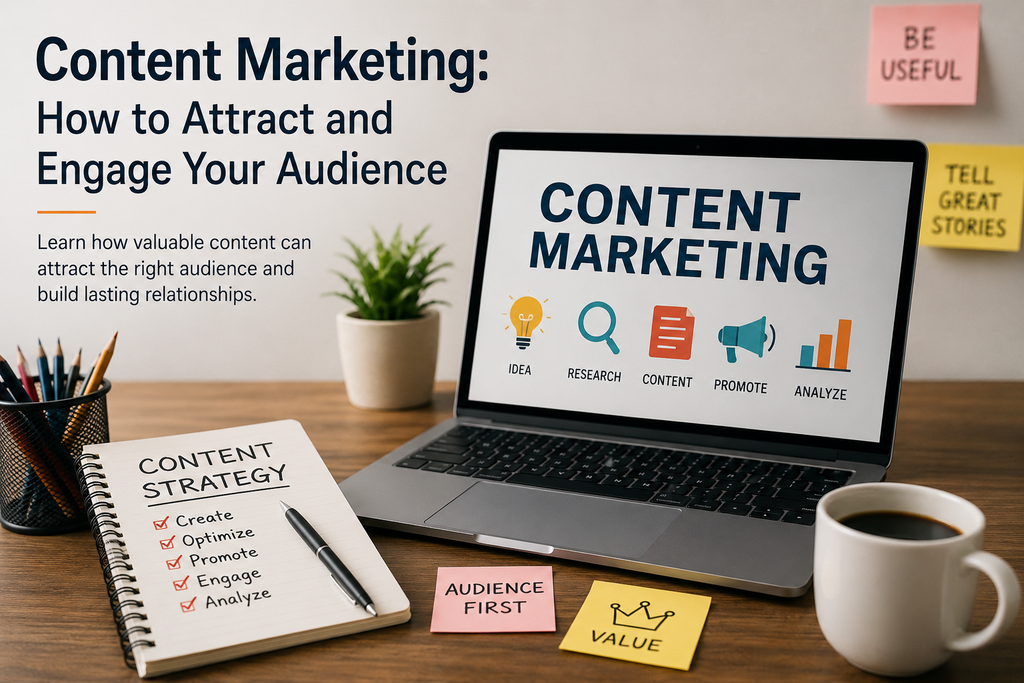
Attracting an audience starts with understanding who they are and what they need. Here’s a step-by-step approach.
Step 1: Define Your Ideal Audience
Before creating content, clarify who you’re trying to reach. Build detailed buyer personas or ideal customer profiles (ICPs) that include:
- Demographics (age, location, job role, industry)
- Psychographics (interests, values, lifestyle)
- Pain points and challenges
- Goals and aspirations
- Buying triggers and objections
- Where they spend time online
The more specific you are, the more relevant your content will be.
Step 2: Map Content to the Buyer Journey
People consume different types of content at different stages of their journey:
- Awareness stage – They realize they have a problem.
- Content: Educational blog posts, explainer videos, infographics, social tips.
- Consideration stage – They evaluate possible solutions.
- Content: Comparison guides, case studies, webinars, how-to tutorials.
- Decision stage – They’re ready to choose a provider.
- Content: Product demos, testimonials, free trials, detailed FAQs.
Mapping content to these stages ensures you meet your audience where they are.[mayadigitaldesk][mindfulmarketing]
Step 3: Choose the Right Topics
Use a mix of methods to find high-impact topics:
- Keyword research – Identify what your audience searches for (e.g., “how to start a digital marketing agency,” “best CRM for small business”).
- Customer conversations – Review sales call transcripts, support tickets, and social comments for real questions and language.
- Competitor analysis – See what topics competitors rank for and identify gaps you can fill.
- Trend monitoring – Use tools like Google Trends to spot breakout topics with growing interest.
Aim for a balance of:
- Evergreen content – Timeless topics that stay relevant (e.g., “What is SEO?”).
- Trending content – Timely topics tied to current events or trends.
- Pillar content – Comprehensive guides that cover a topic in depth and link to related subtopics.
Step 4: Optimize for Discoverability
Great content won’t help if no one finds it. Optimize for:
- Search engines (SEO) – Use relevant keywords in titles, headings, meta descriptions, and throughout the content. Ensure fast load times and mobile-friendliness.
- Social platforms – Use engaging hooks, captions, and hashtags. Tailor formats to each platform (e.g., reels for Instagram, carousels for LinkedIn).
- AI search and summaries – Write clear, structured content with concise answers to common questions, as AI overviews often pull from well-organized sources.
How to Engage Your Audience with Content
Attracting attention is only the first step. To turn visitors into loyal followers and customers, you need to engage them. Here’s how.
1. Focus on Value in Every Piece
Every piece of content should offer something valuable:
- A solution to a problem
- A new insight or perspective
- A practical tip or tool
- Entertainment or inspiration
Ask yourself: “If I were in my audience’s shoes, would I find this useful or interesting?”
2. Tell Compelling Stories
Humans are wired for stories. Use storytelling to:
- Share your brand’s origin and mission
- Highlight customer success stories and transformations
- Illustrate points with real-world examples and anecdotes
Stories make your content more relatable, memorable, and emotionally resonant.
3. Use Engaging Formats and Visuals
Break up text and make content visually appealing with:
- High-quality images and screenshots
- Short videos and animations
- Infographics and data visualizations
- Interactive elements like polls, quizzes, and calculators
Different people prefer different formats, so diversify to reach more of your audience.
4. Encourage Interaction
Turn passive readers into active participants by:
- Asking questions at the end of posts (“What’s your biggest challenge with X?”)
- Including polls and surveys in social posts or emails
- Inviting comments, shares, and user-generated content
- Hosting live Q&A sessions, webinars, or AMAs (Ask Me Anything)
Interaction builds community and gives you valuable feedback.
5. Personalize Where Possible
Use data to tailor content to different segments:
- Send targeted email sequences based on behavior (e.g., downloaded a guide, visited a pricing page).
- Recommend related content based on what users have already read.
- Address specific pain points for different audience segments (e.g., startups vs. established businesses).
Personalization increases relevance and engagement.6. Be Consistent and Reliable
Consistency builds trust and expectation. Create a content calendar that outlines:
- Topics and themes
- Publishing dates and frequency
- Distribution channels (blog, social, email, etc.)
- Responsible team members
Commit to a realistic schedule (e.g., 2–3 blog posts per week, daily social posts) and stick to it.
Measuring and Improving Your Content Performance
To know what’s working, track key metrics such as:
- Traffic – Page views, unique visitors, social reach.
- Engagement – Time on page, bounce rate, comments, shares, likes.
- Leads – Email sign-ups, form submissions, downloads.
- Conversions – Demo requests, trial sign-ups, purchases.
- Retention – Repeat visits, email open rates, customer lifetime value.
Use tools like Google Analytics, social platform insights, and email marketing dashboards to monitor performance. Review data regularly and:
- Double down on high-performing topics and formats.
- Update or repurpose underperforming content.
- Test new headlines, hooks, and CTAs to improve results.
Real-World Examples
Example 1: B2B SaaS Company
A project management software company creates:
- In-depth blog posts on productivity, remote work, and team collaboration.
- Video tutorials and webinars showing how to use their tool effectively.
- Case studies highlighting how clients improved efficiency and saved time.
- Email sequences offering tips and templates based on user behavior.
Result: Steady organic traffic, higher demo sign-ups, and shorter sales cycles due to educated leads.
Example 2: Ecommerce Brand
An online fitness apparel brand produces:
- Workout guides and nutrition tips on their blog.
- Short-form workout videos and challenges on Instagram and TikTok.
- Customer transformation stories and testimonials.
- Email newsletters with exclusive offers and training plans.
Result: Increased social engagement, higher average order value, and strong repeat purchase rates.
Example 3: Local Service Business
A digital marketing agency in India shares:
- Localized content like “How small businesses in Pune can use Google Ads.”
- Client success stories with before/after metrics.
- Live Q&A sessions on LinkedIn and YouTube.
- Free checklists and templates as lead magnets.
Result: More qualified inquiries, stronger local brand recognition, and higher trust from prospects.
Common Mistakes to Avoid
- Creating content without a strategy – Random posts without clear goals or audience focus rarely deliver results.
- Focusing only on sales – Overly promotional content pushes people away; prioritize value first.
- Ignoring distribution – Publishing is only half the battle; promote your content across channels.
- Not measuring results – Without analytics, you can’t know what’s working or improve over time.
- Inconsistency – Irregular publishing reduces visibility and trust.
Getting Started with Content Marketing
If you’re new to content marketing, start with these steps:
- Define your goals – What do you want to achieve? (traffic, leads, sales, brand awareness)
- Understand your audience – Build clear buyer personas.
- Choose 1–2 primary platforms – Focus where your audience is most active.
- Create a 90-day content plan – Outline topics, formats, and publishing schedule.
- Produce and publish consistently – Start small but stay regular.
- Promote your content – Share via social, email, and communities.
- Measure and optimize – Review performance monthly and adjust your strategy.
Conclusion
Content marketing is one of the most effective ways to attract and engage your audience in 2026. By creating valuable, relevant, and consistent content, you can build trust, establish authority, and drive sustainable growth.
The key is to focus on your audience’s needs, tell compelling stories, and continuously improve based on data. Brands that master this approach will not only capture attention but also turn that attention into lasting relationships and revenue.